



I opened the Substack app one afternoon and there they were, little round profile pictures lined up across the top of my screen — each one ringed with an orange dot. If you’ve spent any time on Facebook or Instagram, you knew exactly what you were looking at before your brain even finished processing it.
Stories.
Substack built stories. Except instead of a fifteen-second video of someone’s lunch, the dot means a writer you follow has published something new. Tap it, and you’re reading their latest piece.
What does this mean? This is Substack telling you, plainly, what it wants to become. And if you write on this platform, you need to understand what changed and how to work with it instead of around it.
Let me walk you through it.
Related Article

The Feed Is Now the Front Door
The old Substack model was simple: you wrote, hit publish, and an email landed in inboxes. The inbox was the whole game.
Not anymore.
That row of profiles at the top of the app works exactly like Facebook stories. Follow a writer, and when they publish something new, their profile lights up with an orange dot at the top of your feed. Your readers don’t have to dig through their inbox or remember your name. You’re sitting right there, first thing they see, every time you’ve got something fresh.
What this means practically: consistency now has a visibility reward it never had before. Every time you publish, you reclaim that top-of-feed real estate. Go quiet for two weeks, and you disappear from the shelf while everyone else’s dots keep glowing.
The writers who treat Substack like a blog with an email list attached are going to fall behind the writers who treat it like what it now is — a social platform where the content happens to be worth reading.
You Can Now Choose Your Main Publication (And Switch Between Them)
This one matters for anybody running more than one publication, and a lot of us are.
Substack now lets you choose which of your publications is your main one, the one on display when somebody lands on your profile. If you run two publications, you’re no longer stuck with whichever one the platform decided to feature. You pick.
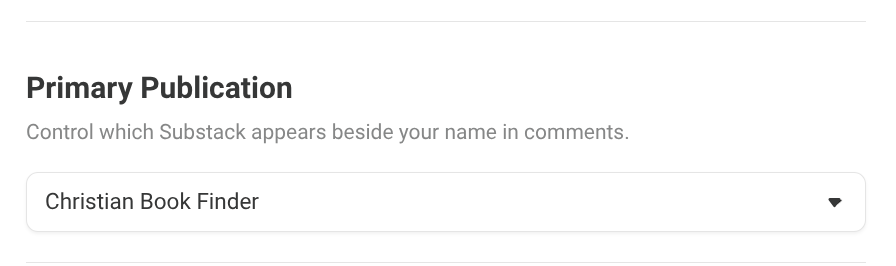
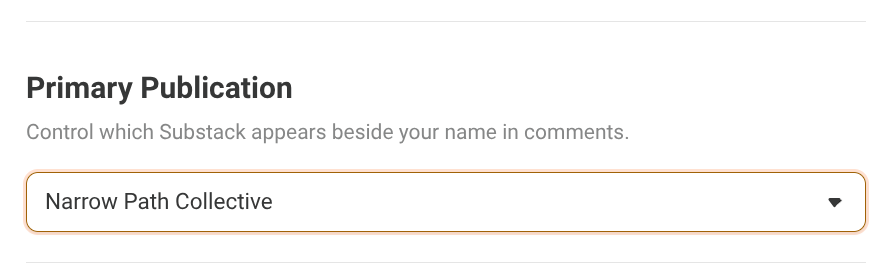
This can be accessed under “edit profile.” Please note, this must be done via desktop. Not mobile.
And it’s not a one-time decision. You can switch between publications, and — here’s the part that matters for your list — you can send emails out to whichever audience you choose. Two publications, two audiences, one dashboard, and you decide which hat you’re wearing when you hit send.
One more detail that saves a real headache: Substack preserves your handle if you switch over. Anybody who’s ever rebranded anything online knows the dread of losing the name people already know you by. That friction is gone. Your handle follows you.
If you’ve been hesitating to spin up a second publication because managing two felt like running two separate businesses — that excuse just got a lot thinner.
The Three-Title Trick Almost Nobody Uses
Now for the part most writers don’t know. I’d wager the majority of people publishing on Substack right now have no idea this exists.
Every article you publish can carry three different titles. Not should, can. And the writers who use all three are outperforming the ones who don’t.
Here’s how it breaks down:
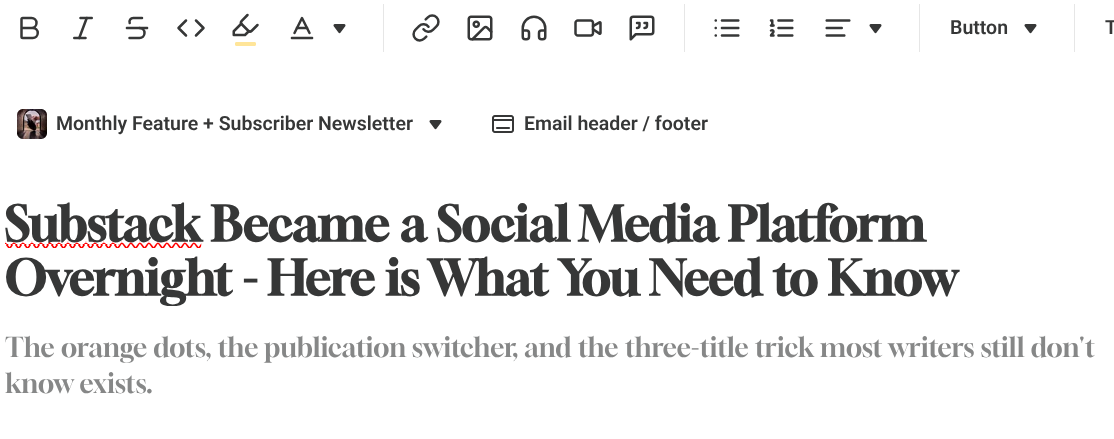
Title #1: The editor title (this is your Notes title). The main title and subtitle you write in the editor stay exactly as you wrote them — and that’s what carries over to Substack Notes and the feed. This is the title your dot-tappers and scrollers see. Write it for people browsing.
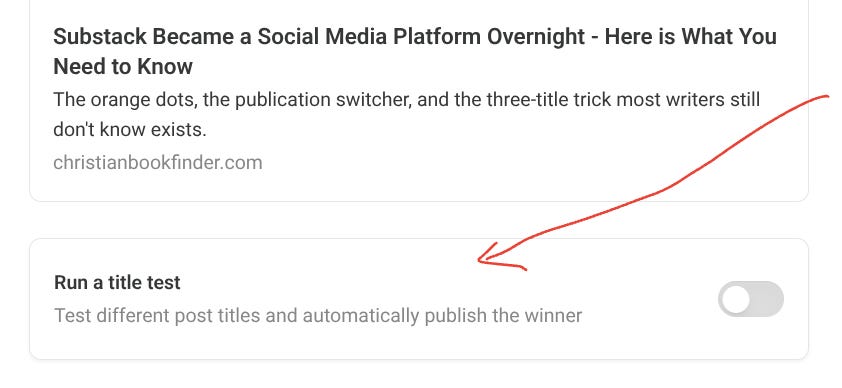
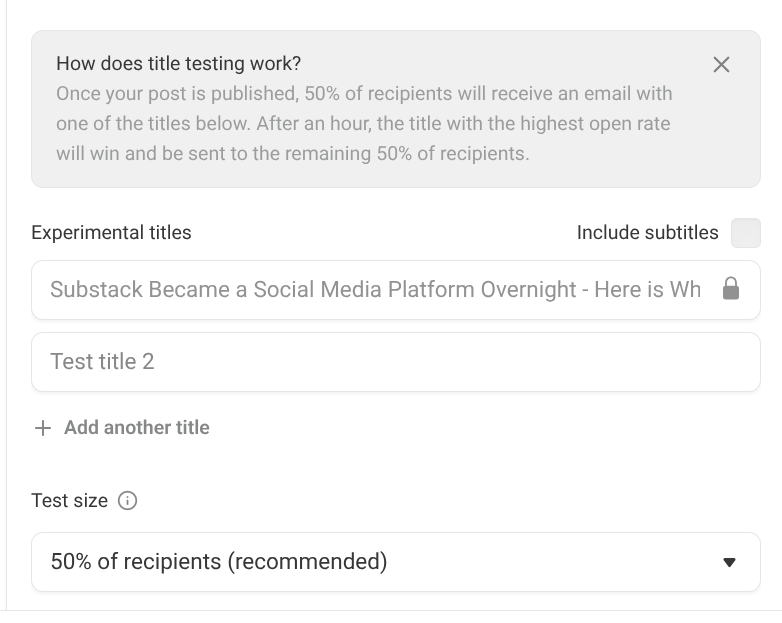
Title #2: The email title. Go into your post settings before you publish, and you can write a different title for the email version. Here’s the kicker — Substack will send out different ones, and whichever title gets the most clicks wins. The platform is running a split test on your behalf. Most writers never touch this setting, which means most writers are leaving opens on the table. An email subject line and a feed headline are two different animals. The feed title can be bold and declarative. The email title needs to earn a click in a crowded inbox. Now you can write each one for its job.
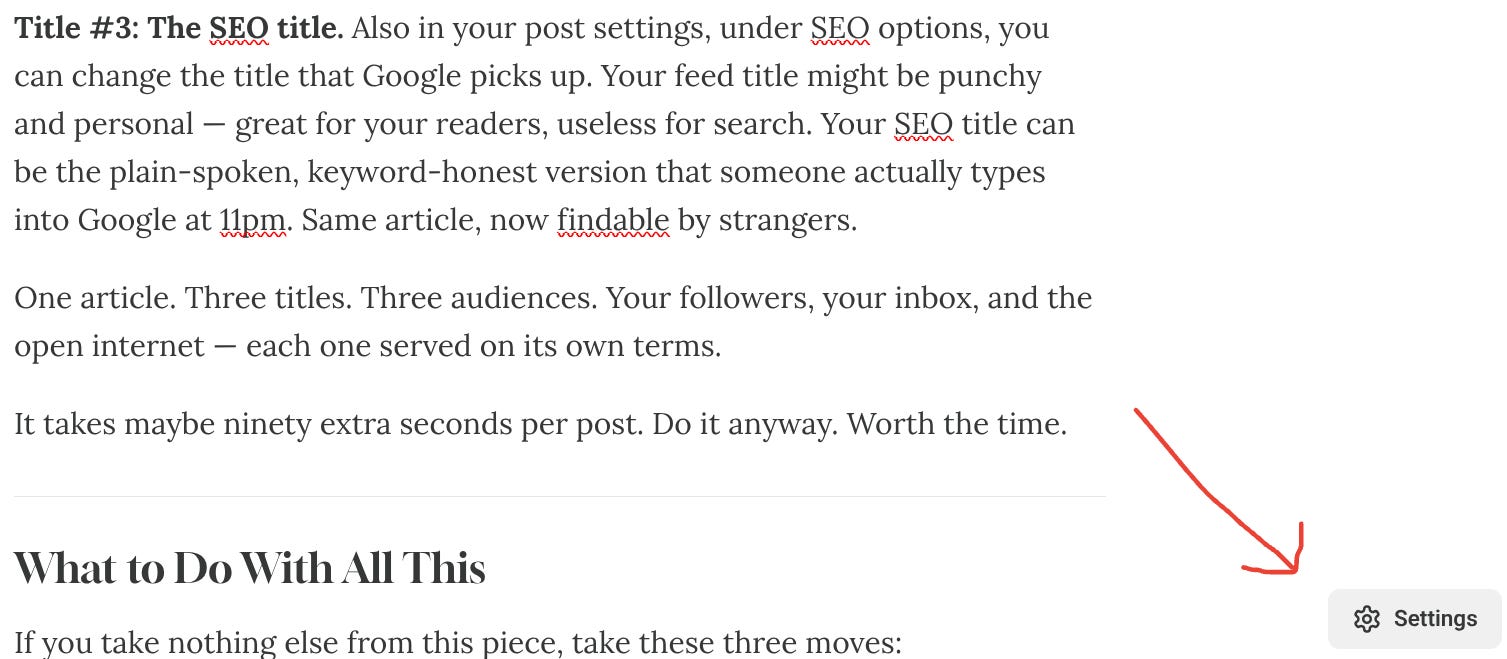
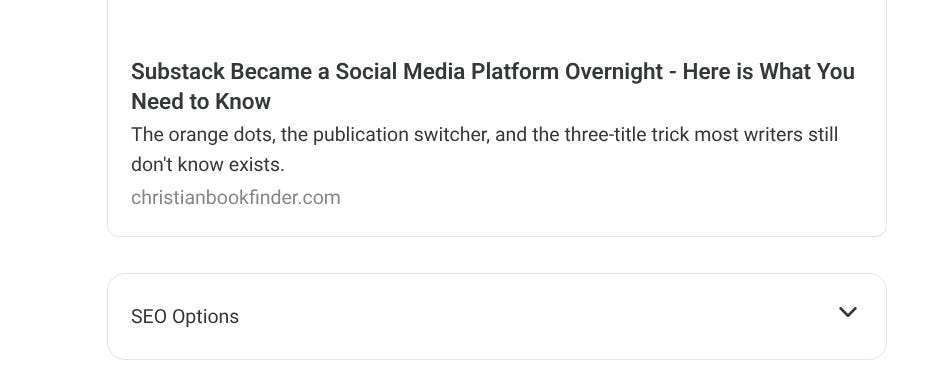
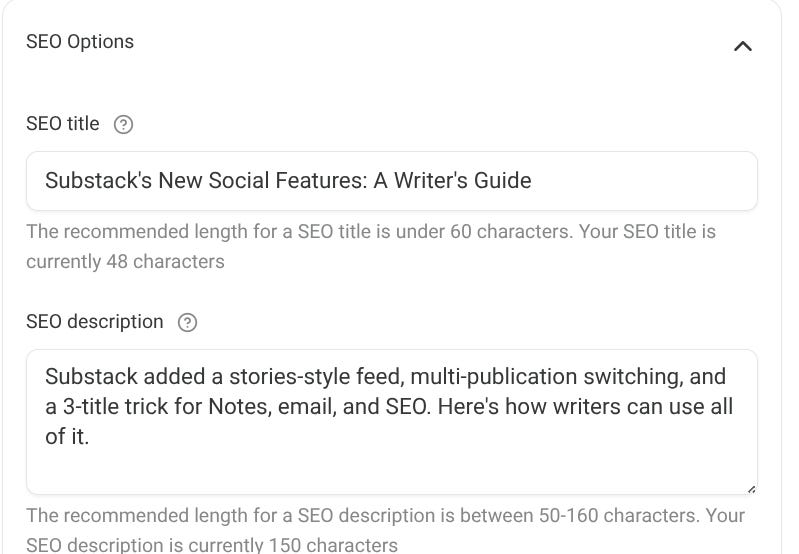
Title #3: The SEO title. Also in your post settings, under SEO options, you can change the title that Google picks up. Your feed title might be punchy and personal — great for your readers, useless for search. Your SEO title can be the plain-spoken, keyword-honest version that someone actually types into Google at 11pm. Same article, now findable by strangers.
One article. Three titles. Three audiences. Your followers, your inbox, and the open internet — each one served on its own terms.
It takes maybe ninety extra seconds per post. Do it anyway. Worth the time.
What to Do With All This
If you take nothing else from this piece, take these three moves:
Publish on a rhythm. The orange dot is free advertising, but only if it keeps lighting up.
Set your main publication deliberately. Don’t let the default decide what new readers see first.
Write all three titles, every time. Editor title for the feed and Notes. Email title in post settings, and let the split test do its work. SEO title for Google.
Substack handed writers a social platform, a multi-publication switchboard, and a built-in headline-testing machine — and most people are still using it like it’s 2022.
You don’t have to be most people.
This Father’s Day, Support Your Indie Authors!
For the man building something that has to last:
Six weeks through Ephesians. Written by a dad of four who builds things and has learned the hard way that foundations are everything. Not about being perfect. About what holds when life doesn’t cooperate.

For the man paying attention to what’s happening in the world and needing it to mean something:
The Signs in Heaven Series — Ender E. Law

An engineer with an MBA spent 30 years in high-tech before turning that same analytical mind on Scripture. What he found in the celestial alignments, the 2017 and 2024 eclipses, the Four Horsemen of Revelation — it’s the kind of thing you can’t unfind once you’ve seen it.
This is Scripture, astronomy, and ancient history pulled into focus.
→ [See the full series on Amazon]
For the man grinding through the week and feeling the gap between who he is on Sunday and who he has to be on Monday:
Thank God It’s Monday(?) — Tom Petersen

Honest and practical. Funnier than it has any right to be. Written by someone who did the wrong thing at work, repeatedly, and found Scripture had something to say about every single situation.
25 reviews. 5 stars. Enough said.
→ [Get it on Amazon]
For the man asking what any of this is actually for:
The Return of Heaven — Steve Martin

40 authors. 3 languages. 1,500 years of writing. One story underneath all of it. For the man who feels the weight of the world but can’t name why — this book names it. Then shows him where it ends.
→ [Get it on Amazon]
For the man who wants to go deeper into what Jesus actually said:
The Heart and Soul of God’s Kingdom — Trip Kimball

A devotional study through the Sermon on the Mount that doesn’t sand the edges down. The Kingdom isn’t a future event to wait for. Jesus made that clear on a hillside. This book makes it clear again.
→ [Get it on Amazon]
This is great information, thank you so much! I just wanted to note that option #2 is only available for those with 200 or more subscribers; I tried it myself, and also confirmed with support. Just sharing in case it helps!
Thanks for putting this out there, man.
How have you personally seen using these features affect your reach, impact, and growth?