


Join us as we explore some of the arguments from one of the books written by our VIP authors.
The Atheist Conversion Manual: 17 Cases that Destroy Secular Religion, Prove God, and Show You the Way to Eternal Life

Thank God Atheists Do Not Live By Their Worldview
Terrible things would happen if they did.
Read a short article exploring the key themes from this conversation Or listen wherever you get your podcasts.
This episode appears in both the Christian Book Finder podcast and on Adrian Warnock’s Christian Podcast

Transcript
Adrian
And I’m here with two people. I’m here with the courageous Chris, or as his actual name is Chris Wright, which is always good. I suppose better than being Chris wrong.
Thomas Hamilton and, for those who don’t know, Thomas was the founder of Christian Book Finder, which I’m involved with as well. We’ll come to that later on no doubt. Chris helped with the launch of his book. Obviously Chris is an author and an ex-atheist. Is that a reasonable way of describing you?
Chris
Well, I was actually never a full atheist. I was just agnostic, but I was borderline. I should have been a full atheist because there was a point where I really hated God and was toying with the possibility that he did not exist.
Adrian
It’s interesting, isn’t it? Because there is this kind of paradox with a lot of atheists where actually they hate the God they don’t believe in.
Chris
Yeah, and you see it all the time, especially on a social media platform like X. They’re all over the place. They’ll vilify God, but at the same time they’ll say he doesn’t exist.
Thomas
It’s almost like they make it their own religion in a way.
Chris
As a matter of fact, that’s something I discuss in the book as well.
Adrian
Yeah, well, to be honest, that was probably a good place to start, I guess, because I noticed the way you describe religion is really interesting. You say religion is worldview put into practice. I really quite like that definition because there’s this really weird attitude in society at the moment that tries to say, “Oh, we don’t have a religion. We don’t have spirituality.”
I used to work in the medical field, and for many years even talking about patients’ faith was a sort of no-no. We don’t have spirituality. We don’t even have philosophy. We don’t even wrestle with the hard questions that people have wrestled with for a thousand years because, you know, we’re somehow better than that, we’re somehow transcended that. This is beginning to chance as some experts start to advocate for a biopsychosocial-spiritual model.

And yet, as you say, most atheists are not atheists at all. They’re at best agnostics.
Chris
Yeah. That’s the thing. They’re trying to make atheism seem like it’s agnosticism. They’re trying to replace agnosticism with atheism, which is really bizarre because they’d say, “Well, I just lack belief in gods.”
But if that’s the case, then you just have a psychological state of mind. You don’t actually have a position on reality itself. So basically your entire position is irrelevant. It’s kind of fun and comical to watch them do that because they don’t understand the metaphysical implications of what they’re saying.
Adrian
Yeah, because that’s right. You often hear atheists say things like, “Look, there are at least a thousand gods, probably more than that over the history of humankind. You don’t believe in 999 of them, do you? So I’m just not believing in one more than you.”
But it’s still not really noticing the point. I don’t know whether it’s also about something in our culture of comfort, or trying to pretend that we’re comfortable anyway even though we’re often not, and not really liking to talk about suffering.
Because to me, even if you do have this broader definition of religion or spirituality or philosophy, these kinds of hard questions that people wrestle with, I think you have to be quite blind to suffering of any kind to not ask those questions. You understand what I mean? It’s just like, well, we just go through life and everything’s okay. Therefore we’re immune to asking the questions that people were still asking around the campfires probably four thousand years ago.

Thomas, what’s your background? Were you ever an atheist or an agnostic, or did you always believe in some form of God yourself?
Thomas
Yeah, that’s what I was going to talk to him about as well. I was actually agnostic before. I sort of believed in a higher power, but I always had my doubts. I was kind of in the same boat as Chris. I was doubting. I turned secular at one point, and I didn’t really believe in a god.
It wasn’t until I started actually exploring and researching that I really started to believe in it. That’s kind of the point that Chris draws in his book.
Adrian
We were just talking about our own backgrounds. Me, I grew up as a believer in God. It never really crossed my mind that he didn’t exist. That’s obviously not your background, eh?
Chris
Well, my background is that I was raised in the Christian faith. My family actually is involved in the Nazarene Church here in Florida. As a matter of fact, they’re still attending the same church that I attended in my childhood.
So it’s pretty cool because some families bounce around to other churches. We actually did for a bit. We attended a church that eventually labeled itself as non-denominational. I’ve been involved in Christianity in some form or fashion. Then when I was in college I actually attended a Presbyterian church. I’ve kind of been all over the place with it.
But as I say in my story, there was one point where it was just going through the motions. Eventually I didn’t actually believe in God, but I was going to church. I won’t say I didn’t believe in God, but I wasn’t sure if he was there or if he wasn’t there. I was in that kind of liminal space.
So when I went to church it was really just performance because that’s all I’d ever known with my family. That’s all they did. They were hardcore believers. Not the kind that were going to slap you over the head with the Bible or something, but they knew that Jesus was the way, the truth, and the life, and they weren’t ashamed of it at all.
Thomas
Yeah. I grew up Catholic, and my family was very religious as well. I sort of had that background too. Our stories are kind of similar because, as I was telling Adrian, I was agnostic as well. I kind of knew there was a higher power but always had my doubts about it.

It wasn’t until I did a lot of research, kind of like I just went full Lee Strobel and did my own research about it, that I actually started believing in Jesus Christ. So it’s very unique that me and you have sort of similar backgrounds.
Chris
That is unique. I’m actually glad you brought up Lee Strobel because he’s one of the ones that I delved into. When I was going through apologetics too, I didn’t actually read The Case for Christ, but The Case for Miracles was one of the greatest books I’ve ever read. The content in there is so fascinating.As a matter of fact, The Atheist Conversion Manual was compared to his work by a reviewer. They thought it was very similar.

Adrian
Yeah, I saw that. Not so similar that they thought you were plagiarizing, I’m sure.
Chris
No, not that similar! I took great pains because when I was writing this book I was doing it mainly from memory, everything that I’ve read and researched throughout my life. I deliberately left footnotes out because I didn’t want them to be a distraction. Even though footnotes are good and it’s good to have sources in big research books, oftentimes people get overwhelmed when there are a billion footnotes. And it takes away the focus on the text. So I wanted to have something they could actually zone in on and just absorb.
Adrian
One of the things is that it’s impossible to write something that’s unique in any field of theology, but it’s probably even more so with apologetics. Going back to that whole thing we were talking about earlier, these deep questions are the very same questions people have been asking for thousands of years and coming up with similar answers.
I don’t know how much you’ve looked into this, Chris, or you for that matter, Thomas, but there are certain ancient Greek philosophies that essentially say exactly the same thing that modern atheists will try and do. They’ll come back and say, “Hang on a minute. You’re saying that we should be worried about death and suffering. Why should we be? We didn’t exist before we were born. We won’t exist after we’re gone. We should just stop moaning about it and enjoy the fact that we’re here.”
That’s more or less the argument. I’m probably butchering ancient Greek philosophy there. But that’s not new, and yet you hear atheists saying almost exactly that thing today.
Chris
Yeah, you’re nailing down what’s essentially nihilism, which is what I talk about in the book. It’s the idea that nothing matters. We’re born, we eat, we sleep, we have fun, and we die. That’s basically that whole philosophy.
And it actually does go back to Plato. I believe he included it in quite a few of his works. Because Plato was probably their first ultimate atheist. He thought all gods were fiction and were just useful fiction that could move the masses. I’m trying to phrase it how he phrased it.
Adrian
It wasn’t quite what Marx said about religion being the opiate of the people, but again, a similar idea. And I think that’s one of the things we realize. These same ideas come up all the way through the ages. Of course, what we also see is there are little glimmers of the truth, little hints of the Christian message and Christian truth coming through different philosophers. Someone like the Apostle Paul can quote an ancient Greek poet: “In him we live and move and have our being.” Obviously that resonates down to today as well.
I think that’s the first thing. I don’t know if you find that’s a battle. I know you’re a lot online and sort of fighting for the gospel, aren’t you, Chris? I wonder whether sometimes that’s the first battle. Most of the people who are actually in the forums have gone past that because I don’t think we’re in the day-to-day world like ancient Athens where they all gathered just to talk about the latest ideas and debate stuff. It’s one of the things that saddens me over the last few years with social media. In a lot of these places there is no real attempt to meet minds and actually have a proper conversation. What do you think about that?
Chris
There isn’t, and that’s because most of our conversations these days are highly emotional, and people don’t realize it. The intellectual side of things has kind of been put to the sideline.
Whenever you’re talking to somebody, you could go trying to have an actual philosophical, respectful conversation. They’ve already picked their side and made up their mind, and they’re not interested in what you have to say because they’ve formed collections of beliefs based on what they’ve already accepted.
Adrian
No, no, sorry. I was just going to say that they can also be shaped by other people’s beliefs as well. If you’ve got a vast set of assumptions that you’ve absorbed from the culture around you, those become part of your worldview whether you’ve thought them through or not.
This is a problem for Christians who haven’t thought things through, but it’s also, if you like, a problem for atheists. Maybe it’s just as well because with all this nihilism and the idea that nothing really matters, that we should all be able to do whatever we want, that there’s no reason for there to be rights at all, if atheists really believed and acted as atheists supposedly should, then the world would be a much worse place.
The reality is that while many Christians are being contaminated by this sort of aggressive secular ideology, especially in my country, actually the foundations of so-called secular society come out of Christianity. Tom Holland explains this quite well. The ability to separate the state from religion, the ability to have freedom of thought, to argue what you want, think what you want, and discuss ideas rather than be killed because you believe the wrong thing, arose out of Christianity.

So many times what atheists don’t realize they’re doing is sawing off the branch they’re sitting on. I think some of them are starting to realize that. That’s why people like Richard Dawkins now seem quite happy to describe themselves as cultural Christians.

Chris
Yeah. I was just about to bring that up because he’s kind of in a hard place right now. He doesn’t want God to exist, but at the same time the Christian God, and the principles of Christianity formed through the sacrifice and resurrection of Christ and the subsequent full-scale revolution that transformed the face of the earth for the better, are still imperative because no other society and no other religion has ever formed such beauty before.
Adrian
Yeah, exactly. It’s interesting, you see it a little bit in certain political views as well. We’ve seen a bit of it on our side of the pond, and I think you’re seeing it on your side too. There’s a kind of new harshness that comes into some politicians who say things like poor people don’t deserve help.
I’ve even heard people say disabled people should just work, which isn’t always possible. Recently in the UK there’s been a lot of discussion about disabled people getting cars that some people seem to think are being given to them by the government, when the reality is that they’re actually paying for them out of their benefits, or what you would call social security.
There’s an incredible amount of hostility. It’s been really interesting because I think some of that comes from an atheistic worldview where we no longer see people as valuable. In the UK they very nearly passed a law on assisted suicide, which again devalues human life. It’s really interesting because that probably didn’t go through because of political changes.
The first thing the new Prime Minister, Andy Burnham, said was, “My premiership is going to be founded on care for people.” You can argue with his politics, and no doubt he’ll make some decisions we won’t agree with, but he’s coming from a Roman Catholic background and clearly has values that see human beings as important, whether they’re contributing to society or whether they’re not able to because they’re unwell or disabled. Partly that’s because his father has Alzheimer’s, but I think it’s also because of values that were put into him as a child. I don’t know about you, but it worries me a little bit that we’re rapidly running away from some of these values and becoming much more hostile toward each other, much more polarized, and much less willing to think the best of each other and actually care for people.
Chris
Yeah, and if you don’t have God, you’re just left with nature. That’s it. Nature with no beginning. That’s the essence of it. There’s no real way to determine values except popular consensus, which basically means whatever humans say you are, that’s what you are. Or you can go the relativism route and say, “My truth is my truth. Your truth is your truth.” Then all of a sudden you’re like, “Wait a minute. We both have different truths. How are we supposed to navigate this world?” Sooner or later you’re eventually in conflict. You find yourself in a state of savagery because you have no grounding. Atheism can’t get around that problem. They can’t.
Adrian
No, that’s right. I think we’re seeing things like human rights, which is good, but what about human responsibilities? If all we’re doing is fighting for our rights and setting ourselves up against each other, that’s kind of not good.
Thomas
Yeah. On that note, in your book you talked about a professor who hated God. Is that correct?
Chris
Yeah. I had several of them, but there’s one in particular that’s really a thorn in my side.
Thomas
He was sort of the inspiration behind the book in an odd way?
Chris
Yeah. We had a love-hate relationship because as a person he was a great guy. We did have some actual philosophical conversations, and it was quite nice. But most of the time he was just bashing Christianity, hating on Christ, and doing his best to drive students away from faith.
Thomas
It sort of reminds me of that movie God’s Not Dead. Essentially it’s the same thing. It’s got the professor in there who hates God. This ties back to what we were talking about earlier. It’s really not about not believing in God. It’s more about being upset with him, if that makes any sense. Or wishing he didn’t exist.
Chris
Yeah. Wishful thinking.
Adrian
Yeah, because if God exists, you can’t just do what you want. I think that’s the thing. Follow your heart. Follow your heart.
Chris
This comes back to one of the reasons I said in the book that atheists don’t want religion to be defined as worldview put into practice. It’s because they want absolute autonomy over themselves.
They think they have it, but what they don’t realize is that absolute autonomy is completely an illusion. The only autonomy you really have is over your own choices. You’re dependent on so many other things throughout your life. When you’re born you’re dependent on parents for everything. As you grow up you get more independence because you get your choices and can choose how to behave and act.
But even then you’re dependent on air to breathe. You’re dependent on water to drink. You’re dependent on food to eat to stay alive. There’s a massive list we could go through of things you can’t get around. You’re dependent. Pure independence is an illusion. You’re going to end up having a master of something whether you like it or not.
Adrian
Yeah, and fortunately that’s true because one of the conversations I’m sure you’ve had with a lot of atheists is when they’ll say, “Are you trying to tell me I shouldn’t have any morals? I’m a good person. I don’t go and murder people. I don’t go and steal.”
And you say, “Well, yes, but actually there’s a whole point about this, which is that you’re not acting consistently with what you say you believe. Either you don’t really believe it, or you’ve been influenced by remnants of Christianity that are actually protecting you.”
If someone can’t conceive, surely there’s something wrong with their DNA. We should just leave them to it. Let natural selection play its part. If someone’s sick, why would we bother to try and treat them, especially if it’s going to cost loads of money? Let them die. They’re the weak. Survival of the fittest. But nobody acts like that, fortunately, or not many anyway.
Chris
They don’t. That’s why one of the questions that really shuts down atheists is when you ask, “Why is it wrong?” Then they start going through all sorts of mental gymnastics trying to define what the standard is because they don’t have one. Sometimes I’ll make memes or something on social media about that point. I don’t do it to be mean. It’s just because it’s funny. When it comes to atheism, morals are just made up. They’re whatever we feel.
Adrian
Or imported from Christianity, as we said.
Chris
Or imported from Christianity.
Adrian
Earlier you mentioned God’s Not Dead. There was actually a book that inspired that movie, written by a friend of mine, a guy called Rice Broocks. If you’re into apologetics and you’ve read Chris’s book, that might be another one to look at. It’s a bit thicker than yours and goes into some things in more detail, but it’s still at a fairly understandable level.

One of the things I liked about your book, Chris, was that it was comprehensible. Some apologetics books are written at a really high academic level for other academics. They have their place and they’re important. But I think what Rice tried to do was pitch somewhere in the middle. If your book is an introduction, then his might be a nice one to follow up with. So tell us a bit about your book.
Chris
The book itself was already pretty much written because it came mostly from articles I’d done on my Substack. But what influenced me to put them together and expand on them was exactly what you just said. I noticed there aren’t many apologetics books out there that are easy for people to read. I wanted to distill complex ideas down into a way that everybody could read and understand.
I’m one of those people who believes that if you can’t explain your philosophy to a child, then you really don’t understand it yourself. That was the point of this book. To give everybody an actual resource they could go to. Instead of having to be on some high academic level, they could understand why the Christian faith is true, why it’s the truth about reality, and that we have evidence for it.
Thomas
I commend you for that. There’s one chapter in your book, I think it’s called The Epic Farce of Evolution. Is that right?
Thomas
Yeah. From that chapter, what do you think is probably the one piece of evidence for Christianity that believers underuse when they push back on evolution?
Chris
Well, just to be clear, that chapter was not actually to prove Christianity. It was to prove that God exists and that evolution is false too.
What actually better explains the evidence is intelligence. I was using that chapter to put forth evidence showing that you can’t get the level of complexity we have in this cosmos, or even on this planet, without a creator behind it.
The specified complexity we see, and irreducible complexity, basically means there are so many different elements of creation that could not have existed without all their parts already being in place. That goes all the way down to the microscopic and atomic levels where everything essentially could not have existed unless it was already put into place.
There was no actual way for simple stepwise transitions from protons to atoms and so on to get to the vast complexity we have now. The only place we observe that kind of complexity arising is through conscious minds that actually create.

The same thing applies to DNA. DNA is compared to something more complex than even the most complex computer code. Codes require coders. So if DNA is more complex than code and is an actual specified code, the blueprint that builds all life, then there has to be a mind behind it. You can’t get around that.
Thomas
Yeah, amen. So hypothetically speaking, if an atheist were talking to you right now, what’s the single argument from your book that you would use if you were having a debate with an atheist?
Chris
Mine would probably be the cosmological argument because I think that’s the most powerful one. The moral argument technically is the most powerful if you think about it because, as we were discussing, you can’t get morality without there being a higher standard, an objective standard that grounds morality for all eternity.
But from a scientific standpoint, the cosmological argument is where I would start. Despite my emphasis on it in the book, I hold to the major points of the Big Bang. What I focus on is the actual origin point because we can’t trace back beyond that. Whether it’s young earth or old earth, I don’t get involved in that. I stay neutral because the point is simply that there was an origin point. God spoke and creation came into being.
When we follow the models back using things like the background radiation and the second law of thermodynamics, we know everything is expanding from a point in the universe. When you trace it all the way back, you get to what physicists call the Planck era.
At that point space, time, and matter came into existence. Before that, there was no space, time, and matter. Atheists try to get around that by saying we don’t have physics for that. Well, of course we don’t because space, time, and matter weren’t there. There was nothing physical.
Thomas
God exists outside of time too.
Chris
Yeah, exactly. Since space, time, and matter came into existence at that point, whatever was before it had to be spaceless, timeless, and immaterial. And unless it was acting by accident, it had to have been an intelligent mind because matter itself and nothingness do not actually take action.
Then we get to the complexity we talked about earlier. This had to be a very highly intelligent being because everything in existence is so complex. Because it made the decision to act, it also had to be personal. We’re talking about a spaceless, timeless, immaterial, intelligent, personal cause for the universe, which would, of course, be God.
Thomas
I like what you’re saying there because I was watching a video a few weeks ago where a physicist explained that everything works in perfect harmony in our universe. If just one little thing is off, life wouldn’t exist. So I have a very hard time believing that all just happened by accident.
Chris
That’s the fine-tuning argument right there.
Adrian
Yeah. Things like water provide a really easy-to-understand example because people often talk about strange constants when discussing this.
Water, H₂O, should be a gas, but because of the way it’s made up, if you put a pond or a glass of water into a cold environment, it freezes from the top down.
Why does that matter? Because if it froze from the bottom up, like most liquids, we would kill all the fish in ponds, rivers, streams, and similar places.
This is a simple example of how even something as basic as water seems to have been designed with life in mind.

Chris
Yeah. It’s a great example of fine-tuning because why would something like that randomly evolve the way it does? It literally preserves life. For that to be an accident is inexplicable.
Adrian
One of the really remarkable things is that before scientists came up with the idea of the Big Bang, there was a widespread belief that the universe had always existed. In a sense, the universe itself was God. It had simply always been. Then Christians came along saying the universe had a beginning and people thought that was nonsense.
But what the Big Bang says is that everything came from nothing. What does the Bible say? It says God created everything out of nothing. This is a beautiful example of where science doesn’t necessarily contradict Christian thought but is actually congruent with it.
Chris
Yeah, I would even go so far as to say it confirms it. There’s a reason the Big Bang theory has lasted as long as it has. I don’t agree with every interpretation of it, but there’s a reason it’s endured. It can actually be modeled mathematically back to an origin point. Mathematics comes from the laws of logic and reason. It’s one of the soundest forms of proof available to us. That’s why the theory has endured so long. It’s rooted in reality.
Adrian
And just taking it a slightly more practical step, because we’ve been fairly abstract and some people watching may be more poetic, when you look up at the stars, the Grand Canyon, some beautiful part of nature, an animal, a beloved dog, flowers, plants, or even something under a microscope, all these things stir wonder in us. They stir gratitude in us. And if there’s no God, who exactly are you thankful to? The Bible says, “The heavens declare the glory of the Lord.” Creation points beyond itself.
Thomas
Yeah, amen.
Chris
Where is the value in a fish, much less a dog, much less a cat, if it simply emerged randomly over millions of years? That brings up another point. There’s such variety.
Adrian
Even in the deepest part of the ocean where nobody could see for thousands or millions of years, there are these beautiful fish with colors. They can’t even see those colors because it’s too dark down there. Now we can see them, but for most of history nobody could. Yet God could.
Chris
Just waiting to be discovered, as if they were made for us to explore. Waiting for us to find them. As it says in Proverbs, and I forget the exact verse, it’s the glory of God to conceal things and the glory of kings to seek them out. The way God has made the world is that we’re supposed to explore his mysteries. He wants that. He loves that.
Another thing that lines up with all this is the question of how you get life from non-life. The atheist position often asks us to believe that at some point there was water, lightning struck it or something similar, and somehow a cell formed. Then that cell evolved into everything we see in the world over millions of years. It’s like, what? How does a non-living cell suddenly become a living cell? How do you get life? You almost have to have more faith to believe that.
Adrian
I think some Christians would say God used some kind of evolutionary process to make the world, while others would argue for a young earth. But either way, the important point is that unless we believe there was a living God behind it all, we still have to explain where everything came from.
That verse we quoted earlier, “In him we live and move and have our being,” points to God somehow creating everything out of nothing and shaping or guiding it. Maybe through evolution, maybe not. But all of it was done by a personal God. Paul says God did it so that we might seek him.
Chris
Amen. Absolutely. The only reason I don’t subscribe to what you described, theistic evolution, is because evolution itself hasn’t been proven. No transitional species have ever been observed. Microevolution, which is really adaptation, has been observed. Animals changing traits to survive and thrive is real. That’s part of what explains some of the variety we see. But it’s always within species. It’s not outside species. That’s where I would draw the line. We’ve never actually observed one creature becoming a completely different creature. It’s never been observed. That’s why I don’t subscribe to macroevolution as a form of theistic evolution. I just don’t think the evidence is there.
Adrian
Yeah, but these are almost secondary issues. What we’ve really done is lay a foundation for why we believe there is a God, why we believe he created everything out of nothing, and why we believe the created world displays his glory.
But of course there’s something else Christians believe, and you come to this toward the end of your book. We believe that God himself stepped into his creation, became a man, lived for us, died for us, and rose again. Can you talk a little bit about that? You may know I’m a little obsessed with the resurrection, having written a book about it myself, so that chapter particularly resonated with me.

Chris
Well, I deliberately positioned it after the discussion of the authenticity of the New Testament because without establishing that first, I can’t really dive into the resurrection since it’s recorded in the New Testament. But the evidence for the resurrection is absolutely astounding.
Chris
First of all, it applies to all six of the historical criteria. I’ve actually got them pulled up because I wanted to list them from that chapter in the book. When historians are analyzing texts from the ancient world, they follow six criteria. I found these outlined in Craig Evans’ book Fabricating Jesus, which is another fantastic book. If you ever get the chance, you should read it because he keeps it simple and explains why the Gnostic gospels are false and why the four gospels we have are the authentic testimony to Christ.

Historical coherence asks whether a text fits the period it claims to come from. Does it align with what we know about the history and culture of the time, or does it seem to come from somewhere else?
Multiple attestation asks whether this is the only source making a claim or whether other sources corroborate it.
Embarrassment asks whether the text includes details that would have been embarrassing to the authors or cast them in a negative light. If it does, then that often increases credibility because it suggests they were not trying to make themselves look good.
Dissimilarity asks whether a document simply repeats what everyone else says or whether it contains distinctive features that stand out.
Cultural background considers whether the text includes accurate details about the period, places, customs, and circumstances involved.
Consistency asks whether it aligns with other verified documents and established historical facts.
We see all of those at work in the resurrection accounts. That goes back to the gospels themselves. You have to read the book to see all the evidence, but they’re early documents. They’re not matching up one hundred percent in the way fabricated accounts often do. They have differences, and each author supplies details the others do not have. They read like eyewitness testimony. Better yet, scholars describe them as ancient biographies because they’re written exactly that way.
Ancient biographies were usually created for important figures, and they were expected to be truthful. If authors knowingly fabricated details, that could have serious consequences. So right there you can see these are not merely fictional documents. They’re written with integrity by people trying to communicate something they believed they had actually witnessed.
For me, one of the biggest points is that women were the first witnesses at the tomb. That is not what you would have invented in the ancient world. In the Greco-Roman period, the testimony of women was generally regarded as less valuable than the testimony of men. The fact that the gospels consistently record women as the first witnesses is a strong indication they were simply reporting what happened.
Then there’s another major point. The disciples gave up everything, including their own lives, to spread this message. If it had been false, all they would have had to do was produce the body of Jesus and say, “Look, here he is. Don’t kill us.” But they never did that. Why would they endure suffering for something they knew was false?
Thomas
Yeah. Nobody dies for a lie.
Adrian
Or not for a lie they know is a lie.
Chris
Exactly. Now, people will often suggest hallucinations. That’s one of the common alternative theories. But mass hallucinations like that simply don’t happen.
Adrian
Mass hysteria can occur, but not in that way. I’m a psychiatrist, and hallucinations generally don’t produce positive outcomes. They are damaging experiences. One or two people can have hallucinations. A couple of people might even have related experiences. But not five hundred people. It just doesn’t happen.
Chris
And as J. Warner Wallace points out in books like Cold-Case Christianity, he was a homicide detective, so he should know.
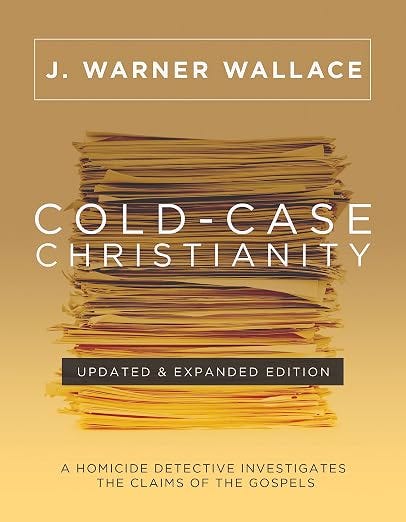
When you’re dealing with a conspiracy, the more people involved, the harder it is to maintain it. Conspiracies only work with very small numbers of people. We’re talking about hundreds of witnesses. Jesus appeared to these people fully restored and fully alive. To me, it takes more faith to believe it didn’t happen than to believe that it did.
Adrian
Yeah. There you go. Courageous Chris writes The Atheist Conversion Manual. So when you finished the book, it’s looking good, and then you’ve got to publish the thing. Am I right in thinking you’re fully independent, or were you with a hybrid publisher? How did you go about it?
Chris
I’m fully independent. I got the ISBN numbers individually so I could use my ministry as the publisher, but technically it was just me.
Adrian
Then you’ve got the challenge of getting people to actually read the thing. I’m wondering what you did about that. And I know one answer is going to be what the man sitting next to me wants you to say, but before we get there, what else did you do apart from joining Christian Book Finder?
Chris
I’ve just been promoting the book like crazy. Not so much over the last couple of weeks because I’ve been working on some other projects. I’m actually creating a course to go along with the book that I’m going to make available as well. That should be releasing sometime in September. I’m almost finished with it. I just need to decide whether to record videos or audio and then finish producing it. There will be lessons, outlines, definitions, and even an exclusive chapter that wasn’t included in the book. So that’s one thing I’ve been working on.
Aside from that, I’ve been talking about the book and sharing it all over social media every way I can. I’ve been getting friends involved. I’ve sent copies out to podcasters and people whose work I enjoy. I’m just sending it out as gifts, and maybe one of them will invite me on. That would be cool. Basically, I’m doing anything and everything I can to market it because I want to get it into as many hands as possible.
Adrian
And how did you hear about Christian Book Finder?
Chris
Well, Thomas and I connected pretty quickly when I first arrived on Substack. We became fairly good friends right off the bat. When I launched the Allegiant Faith Network, we were sharing each other’s content all the time, so we already knew each other well. Then I started hearing about what he was doing with Christian Book Finder, especially creating ARC teams to help with launch reviews and promotion.
Adrian
Can you explain what an ARC team is for those who might not know?
Chris
When you launch a book, you need reviews on Amazon and Goodreads, the two most popular places for book discovery. If you don’t have many reviews, your book can sink very quickly. What Thomas does is create ARC teams. He gathers people who are willing to read an early copy of your book before launch. They evaluate it, think about it, and then during launch week they leave reviews on Amazon and Goodreads.
Thomas
That way people can actually find your book. If any of you listening are getting ready to publish a book, the first thirty days after publication on Amazon are the most important.
Amazon gives you a slight boost in the algorithm during that period. So in those first thirty days you want marketing, sales, and reviews. Those first thirty days are absolutely crucial.
Adrian
I think that’s absolutely right. The only thing I would add is that Amazon is only one source. Physical bookshops and other channels matter too. Amazon is one of the few places where people can discover authors they don’t already know. That’s why reviews, social media, advertising, good categorization, and all those things matter. But even if you’ve had a book for years and it never quite took off, you can sometimes relaunch it. Then the challenge is to keep going and think, “Can I afford some budget for advertising? Maybe I should be going on podcasts as a guest. Maybe I should share part of a chapter for free on Substack so people can get a taste of it.” What else can I do without sounding like I’m constantly saying, “Buy my book”?
Thomas
That’s exactly what we try to achieve at Christian Book Finder. We build momentum before launch, and then during launch week we aim to get reviews and sales. That helps the book compound better over time so you’re not constantly shouting into social media and doing endless self-promotion. That’s one of the major goals of what we’re trying to achieve.
What can you do to help Christian books?

Despite reports of the demise of publishing in general, and Christian publishing in particular, book making is a $100 billion per year global industry. So there is still a huge demand for books. Religious books make up $13.9 billion of that, with the majority of those being Christian.
Adrian
Yeah, but it’s also about helping people do more. If there’s one thing you can do to help books, authors, and future readers of books you’ve enjoyed, it’s simply to write a review. Ideally, put that review everywhere you can. Put it on Amazon, Goodreads, Substack, other social media platforms, your own website, or even in an email newsletter.
And by the way, if you’ve got an email newsletter, why on earth aren’t you importing it into Substack and using this free newsletter platform? Maybe there are some specialist things another company can do that Substack can’t, but for most of us, Substack provides the perfect home for an email newsletter. It’s also a great place for conversations like this and a great place for discovering books. Within the first couple of weeks of me joining, I’ve had people say, “I’ve bought your book,” or, “I’m reading your book.” People don’t generally say that on X, Facebook, or many of the other platforms. So if you’re an author, Substack is a great place to be. If you’re a reader, it’s a great place to be too.
And if you’re in either of those categories, come and subscribe to Christian Book Finder. It’s free initially. Yes, there’s a paid tier for authors, but if you’re a reader and you want to join one of these teams that read books before they’re launched and help review them, then come along.
Come and read my stuff at Adrian Warnock. Come and read Courageous Chris as well. You can dip your toes in and discover what authors are saying before you buy their books.
Thomas
Yeah, absolutely.
Chris, I just have one more question for you, if you don’t mind.
The book is dedicated to your son, correct?
Chris
Yes, it is.
Thomas
Okay. What do you want him to take from it that you didn’t figure out until adulthood?
Chris
I want him to immediately understand that he can trust Christ. Christ is not just a figure in history. He really is the way, the truth, and the life.
I don’t want him to have to go through the struggles of piecing all that together himself the way I did.
I want him to know from a young age that he can trust Jesus for everything, and that he should, because there’s no life beyond him.
Amen.
Adrian
I don’t know what else we could wish for our viewers as well.
If you’ve somehow wandered into this stream and you’re not a believer, and maybe you’re even an atheist, then Chris Wright’s book, The Atheist Conversion Manual, might be for you.
If you are a believer but you want to help other people come to know Jesus, just in the way Chris talked about with his own family member, then perhaps this book is for you as well.
There are other books to read too. It won’t be the last book you read, but maybe it should be the next one.
And that, I suppose, is about as good a place as any to stop, unless anyone has any last closing comments.
We’ve had a few comments in the live chat. I’m sorry, guys. I’ve had half a mind on the chat, but I haven’t really been able to pay attention to it because I’ve been so caught up in our conversation.
Thomas
Yeah, it was a good one.
Adrian
It was a good one.
Chris
It was really good. I enjoyed it immensely.
Adrian
That hour goes past quickly, doesn’t it?
So thanks, guys.
Bless you, guys.
Chris
Gotcha, brother.
Amazon links on this page are affiliate links, which means without costing you any more money, we receive a small commission for any sales.