

Here’s another one of those rumors that won’t die. Even publishers repeat it. It goes like this: you have to buy the book before you’re allowed to leave an Amazon review. Wrong. And it’s a bigger misconception than most people realize. The confusion comes from the “Verified Purchase” badge. People see it stamped on reviews and assume that’s the bar you have to clear. It isn’t. You don’t need to buy the book at all.
Here’s what Amazon actually requires. Read on.
Spotlight:
Chosen: Sacred Journeys with a Faithful God

Jan Johnson is one of ten voices behind Chosen: Sacred Journeys with a Faithful God, a collection of more than twenty testimonies from people who walked through their own “curve ball” seasons — stories of devastating loss, unexpected challenges, doubt, and breakthrough, told honestly rather than wrapped in a neat bow.
The Reply That Kills a Review
Picture your launch team. You send the message asking for honest reviews once everyone’s had a few days with the manuscript. Half the replies come back the same way: “I’d love to, but I never actually bought a copy — won’t Amazon just take it down?” So they sit it out. Multiply that by every author running a launch this month, and you’ve got a stack of real, willing readers who never post a word, all because of a rule that was never actually the rule.
That’s the Assumption Tax. It’s what you pay every time you build a decision on a rumor instead of a source — and in this case, the tax comes straight out of your star count.
The Assumption Tax, Part One: What Everyone Assumes
The claim going around is simple: no purchase, no review. It sounds official. It sounds like the sort of thing a platform would obviously require. It’s also completely wrong, and it’s costing authors reviews they were always eligible to collect.
The Assumption Tax, Part Two: What’s Actually True
Amazon’s real requirement has nothing to do with buying your specific book. It has to do with the reviewer’s account. To leave a review, a customer needs to have spent at least $50 on Amazon.com in the trailing twelve months using a valid credit or debit card. That’s it. That’s the bar.
Notice what that means. Your reader doesn’t need a receipt for your book. They need an active Amazon account with real spending history behind it — groceries, diapers, a toaster, doesn’t matter. If they’ve crossed that $50 threshold in the last year, they are eligible to review your book whether they bought it, borrowed it, or you handed them a free copy yourself.
Giving a reader a free advance copy in exchange for an honest review is allowed — it’s how ARC programs work, and it’s compliant with both Amazon’s terms and FTC disclosure guidelines. What isn’t allowed is requiring a review as a condition of getting the book.
The Assumption Tax, Part Three: Why the Myth Keeps Winning
So why does the wrong version keep spreading? Volume beats accuracy, almost every time. Enough authors repeat “you have to buy it” with enough confidence, and it starts sounding like policy instead of guesswork. Nobody checks the source. They just pass along what sounded official the last time they heard it.
That’s the whole job of this article. To hand you the accurate version so you can stop losing reviews to a rule that was never real.
The Assumption Tax, Part Four: The Clock Nobody Tells You About
Here’s the other myth costing you, and it’s a timing one. Most authors treat reviews as something that trickles in over months, no rush. But Amazon’s New Release window and early momentum signals reward books that build review velocity fast — the first week or two after launch carries far more algorithmic weight than the same number of reviews spread across a year. Ten reviews in your first seven days moves you differently than ten reviews earned over six months. Amazon is watching how recently and how quickly a book gathers reviews, not just how many it eventually collects.
Don’t let your launch team’s reviews trickle in whenever they get around to it. Coordinate the ask so most of them land in that first week, while the door is still open.
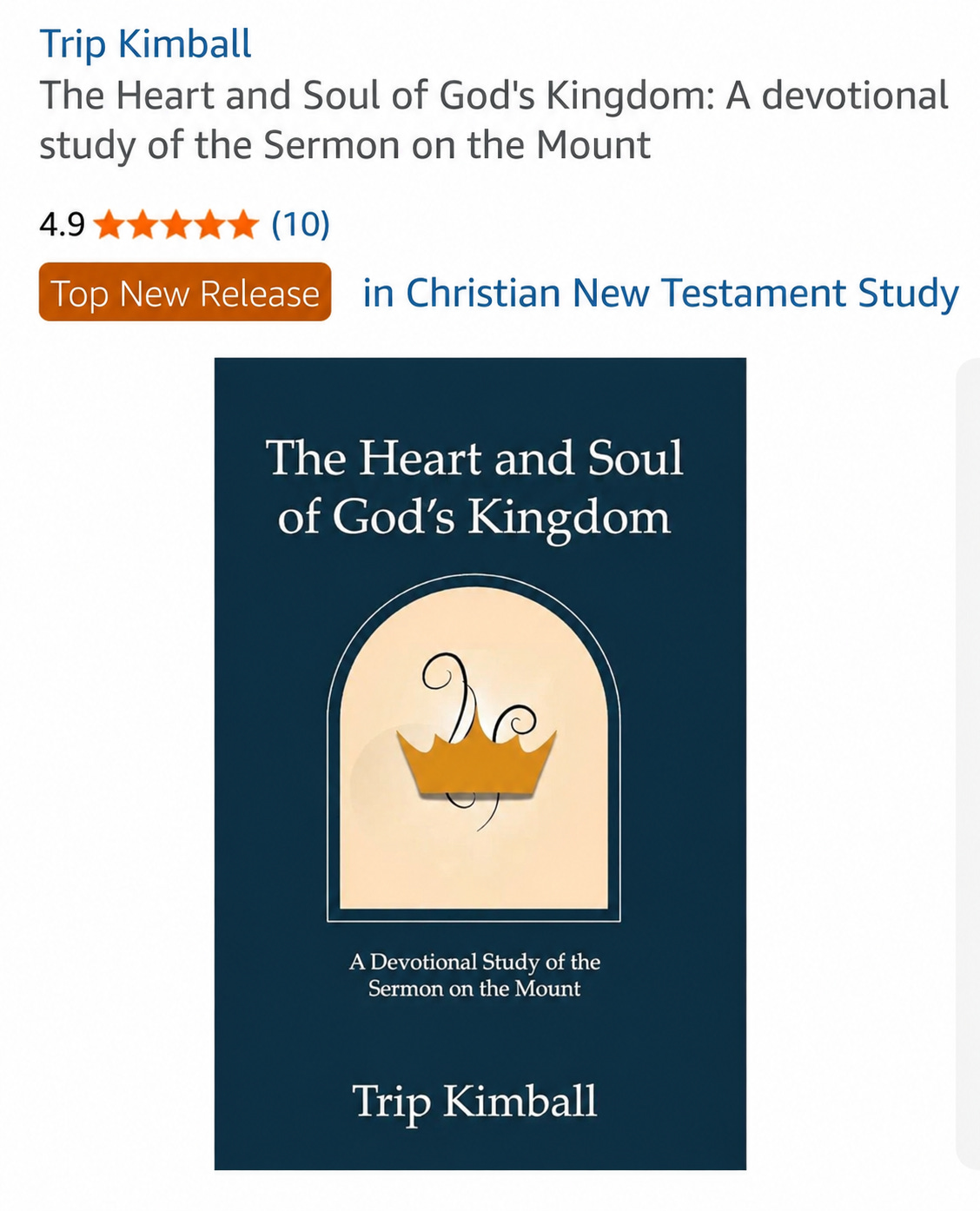
Trip Kimball’s The Heart and Soul of God’s Kingdom: A Devotional Study of the Sermon on the Mount is proof of what a coordinated launch team can do. We ran his ARC and launch campaign and it earned him a Top New Release badge on Amazon. This only happens when reviews land close together in that opening window instead of trickling in over months.
You’ll see this same window open twice more this week. Chris Wright’s (𝕮𝖔𝖚𝖗𝖆𝖌𝖊𝖔𝖚𝖘 𝕮𝖍𝖗𝖎𝖘) The Atheist Conversion Manual releases July 20th, walking readers through the evidence for God, the reliability of Scripture, and the case for Christ as the answer to the questions skeptics actually ask. Gary York’s Christ in You follows on July 21st, an unpacking of Paul’s phrase “Christ in you, the hope of glory” into what union with Christ actually looks like in daily life. Both launches land inside the same seven-day window this newsletter is built around.
What To Do With This
If you have a launch team, message them directly. Tell them plainly: you do not need to have purchased the book to review it. You need an Amazon account with at least $50 in purchases over the last twelve months.
Stop apologizing for asking non-buyers to review. You were never breaking a rule. You were following one you’d never actually been told.
If you’re running an ARC program, keep the ask clean. Give the free copy freely. Ask for an honest review as a separate, unconditional request — never “leave a review to keep the book.”
Encourage a few verified purchases early. Amazon weighs non-verified reviews less and may limit them for authors with thin sales history, so a handful of genuine purchases alongside your ARC reviews strengthens your whole profile.
Coordinate the timing, not just the ask. Have your launch team ready to post the moment the book goes live, and follow up once within the first week. Reviews clustered in that early window carry more weight than the same reviews trickling in over months.
Pass this along. Every author on your team who believes either myth is one message away from having it corrected. Be the correction.
Call to Action Share this article with your launch team before your next release. And if you’re building your author platform and want reviews, visibility, and a vetted readership that actually reads before it rates, that’s exactly what Christian Book Finder was built for.
-Thomas M. Hamilton
Thanks for this information.
Great information! Thank you